SERVICES AT A GLANCE
GROUP FACILITATION. Call me when a group, community, or team is stuck on a hard problem, when you need a retreat to reset strategy or bring new people into the fold, or when a public or multi-stakeholder issue has gotten too tangled for a normal meeting to solve.TEAM CULTURE BUILDING. Call me when conflict between people is hurting performance, when the whole team’s culture has gone sideways, or when a basically healthy team wants to get better at the conversations, relationships, and accountability that make good work possible.RELATIONSHIP COACHING. Call me when you want to get better yourself — running meetings, building culture, handling difficult relationships, or navigating the people side of your job. I also teach teams these skills directly when the goal is to build the capability inside the organization rather than continue relying on an outside facilitator.OMBUDSMAN WORK. Call me when someone needs a confidential, neutral place to raise a concern, understand what is happening, and think through what to do before it turns into a formal complaint or larger organizational problem.MEDIATION. Call me when two specific people or parties are in a defined dispute and need a neutral third party to help them understand the conflict, negotiate next steps, and reach a workable agreement.2. Civility is not the same as resolutionTraining can improve visible behavior while leaving the underlying emotional and relational problem intact. People become more careful and professional, yet continue to hold back, interpret one another through fixed stories, or process the real conversation after the meeting. The goal is not less professionalism; it is enough relational depth that professionalism does not become a mask for important information.3. Psychological safety is a starting condition, not the destinationSafety helps people speak. It does not remove uncertainty, competing priorities, identity, or disagreement. Even trusting teams can become defensive, narrow what they notice, and move too quickly toward certainty when the stakes rise. My practical concern is therefore not only whether people feel safe enough to participate, but whether the group has structures that help connection and openness survive the difficult part of the conversation.4. The problem is often access, not intelligenceMost groups already contain expertise, lived experience, intuition, creativity, and emotional intelligence. Under pressure, some of that becomes less accessible: quieter people stop contributing, individuals defend familiar interpretations, the group overlooks contradictory information, and the first plausible solution begins to feel like relief. Good facilitation widens what can enter awareness before asking the group to narrow again into a decision.5. Connection is part of the work itselfConnection is not only rapport, friendliness, or a warm-up before content. The quality of relationship affects what people are willing to say, what they can hear without immediately defending, how much uncertainty they can tolerate, and whether different perspectives become useful information rather than threats. I therefore design for connection before difficult content and keep working on connection through disagreement.6. Work underneath positionsA stated position is often a strategy for protecting something deeper. I use lived stories, curiosity, needs-oriented inquiry, perspective-taking, and direct reflection to move from “what I think should happen” toward “what matters here, what am I afraid of, what do I need, what am I protecting, and what do I want from you?” This does not erase substantive disagreement; it gives people more room to understand one another and find flexibility where the positions looked rigid.7. Feeling and embodiment are information, not proofWords and conscious analysis only surface part of what a person or group knows. Tension, hesitation, excitement, withdrawal, sadness, anger, intuition, and silence can all be signals worth noticing. I use interoception, breath, pauses, embodied reflection, and slower pacing to help people notice those signals without treating them as unquestionable truth. Feeling initiates inquiry; it does not end it.8. Exploration before convergenceTeams often solve too soon because certainty itself feels relieving. I deliberately separate exploration from evaluation and decision-making so a group can hold competing facts, emotions, interpretations, and possibilities long enough for a fuller pattern to emerge. Then the group can converge with more information rather than simply selecting the first answer that reduces discomfort. 9. Notice · Hold · AllowNotice — what is happening internally, relationally, and in the room, without immediately acting on the first interpretation.Hold — keep divergent facts, emotions, perspectives, and uncertainty present long enough to understand more of the whole.Allow — create enough space, silence, reflection, and collective attention for a new pattern, question, or possibility to emerge before forcing action.This is a practical framework, not a claim that silence or a “relational field” contains a guaranteed answer. The disciplined claim is that attention, emotion, bodily awareness, relationship, and nonconscious integration affect what becomes available to thought and conversation.10. Breakthrough → practice → flywheelA good retreat or facilitated conversation is not the endpoint. The value compounds when the group identifies the practices that made the conversation different and repeats them in ordinary work: different structure creates a different experience; repeated experience builds capacity; capacity becomes habit; habit shapes culture. That is the flywheel I am ultimately trying to help a client create.Facilitator Presence Is Part of the MethodI am a recovering lawyer — trained to advocate, argue, analyze, and win — who has spent years practicing an almost opposite discipline: meditation, mindfulness, emotional and bodily awareness, questioning my own certainty, and staying present with tension without needing to fix, control, or win. In difficult rooms, that lets me keep working with what is happening — including anger or resistance directed at me — without making the room about my own defensiveness.GROUP FACILITATION
Cross-Functional & Post-Merger Integration
Organizations can be merged on an org chart long before the people inside them operate as one. I help merged departments and historically separate units build the working relationships and shared ownership it takes to function as a system instead of a collection of silos — so the org chart and the day-to-day experience finally match.Strategic Planning, Retreats & Complex Decisions
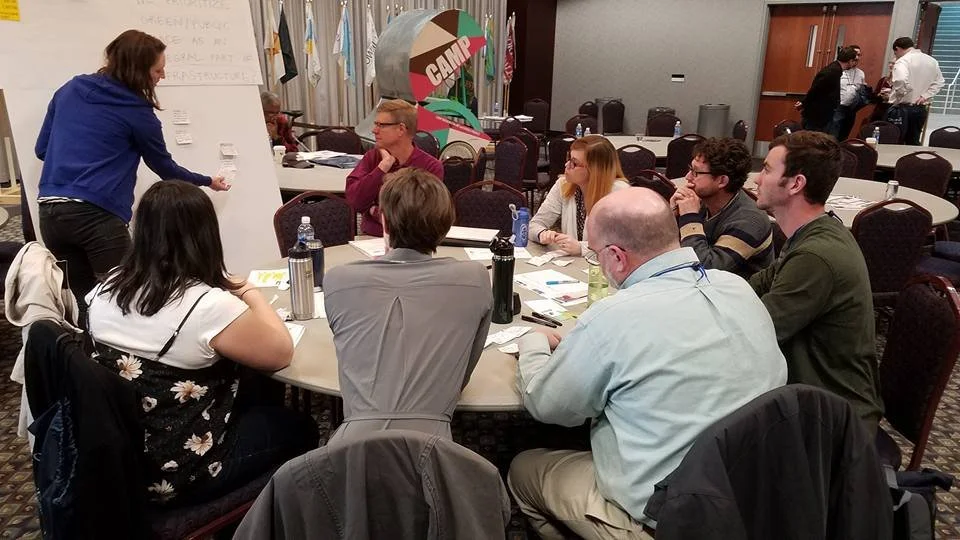
I design strategic conversations when a group needs more than another planning exercise — whether that means a leadership retreat, an organizational assessment, a visioning initiative, or a series of conversations around a hard decision. My role is to create a process where the people who understand different parts of the situation can contribute meaningfully, the real tradeoffs become visible, and the direction that emerges has enough ownership to move into implementation rather than becoming another plan handed down for people to react to.Public Trust, Stakeholder Engagement & High-Conflict Issues
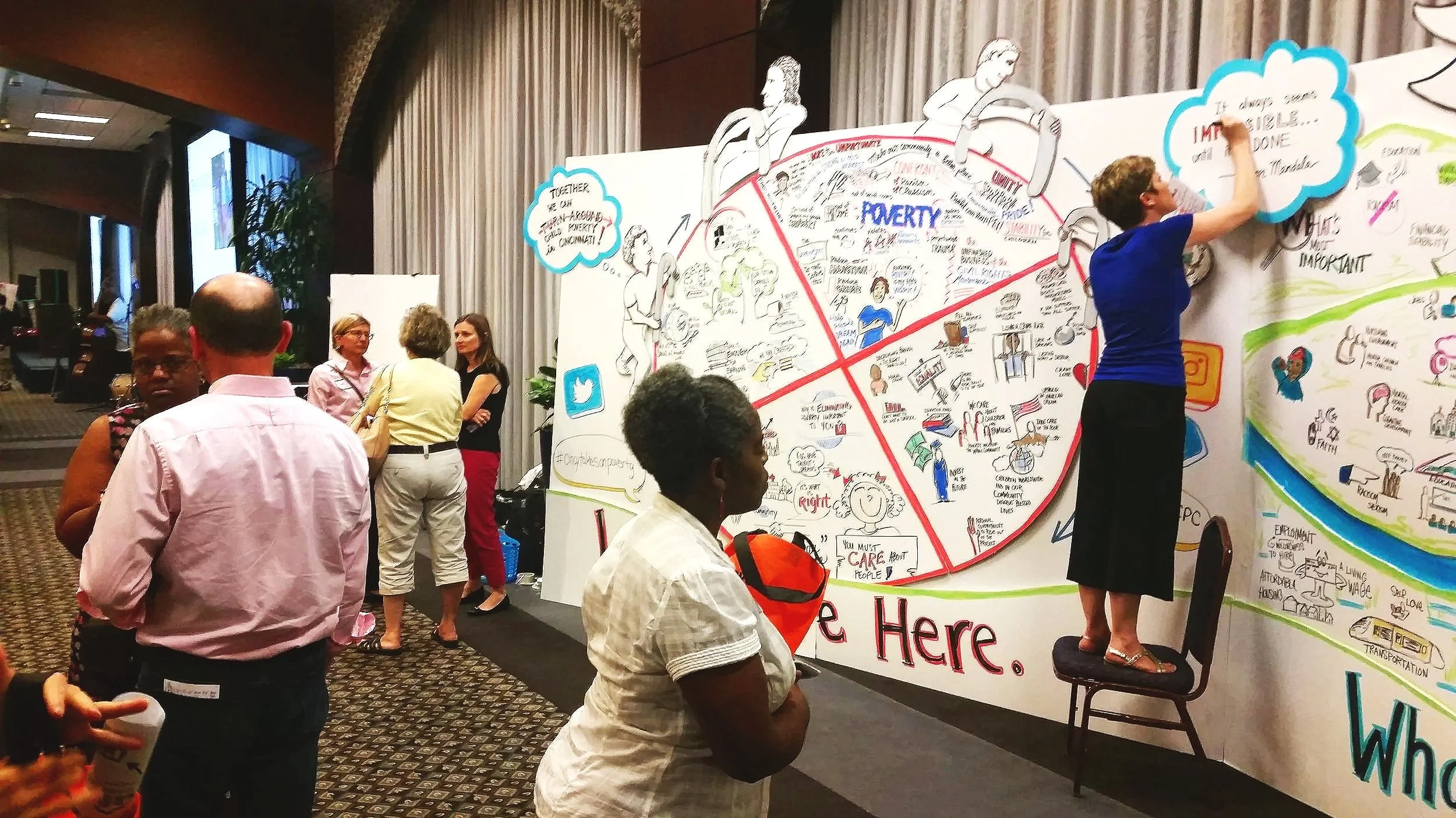
Sometimes the challenge isn’t collecting public input — it’s rebuilding trust between an institution and the people it serves, including situations where the issue has become charged enough that a conventional hearing may make the relationship worse.I design engagement processes where people can speak directly with institutional leaders, understand one another more accurately, and see a real connection between showing up and what happens next. When identity or deeply held beliefs are part of the conflict, agreement does not have to be the goal; people can remain opposed while understanding why the issue matters to someone on the other side, preserving enough relationship to keep working together after the decision is made.Nonprofit Coalitions & Multi-Agency Collaboration
Some of the most complicated systems have no single person in charge. Nonprofits, healthcare providers, schools, agencies, funders, and community organizations may share a problem while having separate leadership, funding, priorities, and institutional identities, so collaboration has to be built relationally rather than imposed hierarchically.I help these groups find enough shared purpose to work honestly across those differences, see the gaps and overlaps in who is doing what, clarify roles and responsibilities, and build the relationships and structures that allow independent organizations to act together.Team Conflict & Relationship Repair
Sometimes a work problem becomes a relationship problem—people interpret each other through old grievances, communicate indirectly, complain to third parties, or stay outwardly professional while distrust shapes everything underneath.I work with the people involved, often individually before bringing them together, to understand what is driving the conflict, what each person needs from the working relationship, and what each may be contributing to the pattern. Then we turn that understanding into clearer requests, boundaries, agreements, and ways of working together that can actually hold after I leave.Organizational Culture Building
Leadership teams have the same problems as any other team — except their unresolved dynamics spread through the organization. I work with leadership groups when authority is unclear, confidence has eroded, difficult conversations are avoided, accountability is inconsistent, or individual relationships interfere with collective leadership.Depending on the situation, that can mean individual coaching, facilitated leadership conversations, a retreat, or a longer development process. The aim isn’t simply better rapport. It is enough trust and candor that leaders can challenge one another, make difficult decisions, hold one another accountable, and give the people around them a more coherent experience of leadership.I also work with healthy teams that want to strengthen how they run meetings, disagree, share responsibility, and surface problems before a crisis exposes the gaps.Relationship Coaching
I coach leaders navigating difficult relationships, uncertain situations, organizational conflict, or the human complexity of their role. Coaching sometimes stands alone, but more often grows out of a larger engagement, which means we can work on real situations as they unfold: preparing for a hard conversation, examining what happened afterward, understanding the leader’s own reactions and assumptions, and experimenting with a different way of responding the next time.The goal isn’t to give people scripts for controlling other people. It is to help leaders become more aware of what is happening in themselves and around them so they can stay grounded, remain connected, and respond with more intention when pressure rises.Teaching the Skills Directly
Some clients want their people to learn these skills directly rather than continue relying on me. I build training around real problems, not abstract instruction, so participants practice the kinds of conversations they need to have—running better meetings, listening under pressure, handling disagreement, making clearer requests, repairing relationships, and working through uncertainty.The point is not simply to have a good training day. It is for the skill to remain inside the organization after I’m gone.Ombudsperson Work
Some problems need a confidential place to go before they need a formal process.I can serve as an independent, neutral resource where employees or leaders can raise a concern, understand the situation more clearly, think through their options, and get informal help addressing a conflict. This can be particularly useful when someone is reluctant to go directly to management or HR, when a problem may still be workable before it becomes a grievance, or when leadership wants a way for concerns to surface before they become larger organizational problems.The role is confidential and informal rather than adjudicative: I don’t investigate to determine who is right or impose an outcome. I help people understand what is happening, consider constructive ways forward, and decide what they want to do next.Mediation
I provide traditional mediation when two or more people or parties need a neutral third person to help them work through a defined dispute.I’ve been a certified mediator since 1997, beginning with family conflict and later applying that background to workplace, organizational, government, and community disputes. Depending on the situation, mediation may include individual preparation, facilitated negotiation, relationship repair, clearer requests and boundaries, or specific agreements about how the parties will move forward.What Clients Ultimately Gain
The immediate product may be a repaired team, a leadership reset, a strategic plan, a public-engagement process, a clearer structure for collaboration, or an agreement between people in conflict. But I want the engagement to leave something deeper behind: people understanding the human issue underneath the presenting problem more clearly, relationships becoming useful again, important information that used to stay hidden becoming available, and groups making decisions from a fuller picture of what is actually happening.Just as importantly, I want people to understand enough about how they got there to do more of it themselves. A successful engagement should leave a team better able to surface a problem before it festers, stay connected through disagreement, make a difficult decision without losing half the room, and have the next hard conversation without automatically needing to bring me back in.That’s how I help people Connect Deeply · Accomplish More.
1. Get beneath the presenting problemOrganizations often call about communication, behavior, silos, strategy, a public controversy, or a difficult person. Those may all be real, but durable change often requires asking what the surface problem is protecting or expressing: fear, pain, distrust, belonging, competence, autonomy, fairness, status, identity, grief, resentment, or a relationship that has lost enough trust that ordinary management tools no longer reach it.